

Art History: Art Nouveau
History of design
Art is always inspired and reinvented by styles from the past, and today there is a great tendency to look nostalgically towards the previous century.
Investigating the evolution of design allows us to gain new perspectives and a greater understanding of our past, because it is directly related to the historical context that defines each period, especially visible through aesthetics. Therefore, we want to highlight the characteristics of each period and the evolution of design throughout the 20th century.
When history marks the birth of the Art Nouveau movement, society was experiencing the Second Industrial Revolution—a time of profound change much like the one we are living through now. Understanding the artistic movement founded by Morris is as exciting as witnessing our own current history unfold.
What is Art Nouveau?
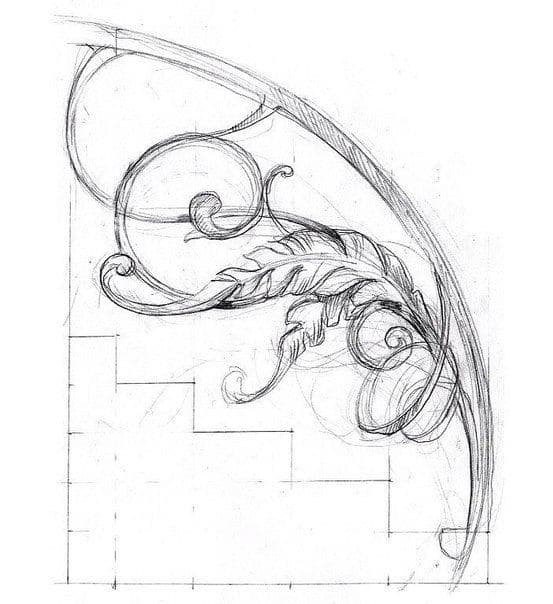
We must begin by discussing Art Nouveau (“new art” in French). It emerged in the last decade of the 19th century , and its influence extended until the end of the first decade of the 20th century. It was known by different names: Jugendstil (Germany and the Nordic countries), Sezession (Austria), Modern Style (United Kingdom), Nieuwe Kunst (Netherlands), Liberty (Italy), and Modernismo (Spain). It all comes down to the same thing: the intention to adapt to the future… Does that sound familiar? Taking advantage of the turn of the century, it aims to break with the past, in a time of great socio-political changes, such as the industrial revolution. It was born with the intention of creating a new, free, youthful, and modern art . Based on the exaltation of nature, plant forms, and the sensual movement of organic lines, it combines function and ornamentation. It values craftsmanship and aims to democratize beauty, giving aesthetic value even to the most everyday objects, thus making art accessible to everyone. Designers used to be multidisciplinary artists who moved from graphic arts and painting to architecture and interior design, and to furniture design and decoration.
Art Nouveau in graphic arts and painting
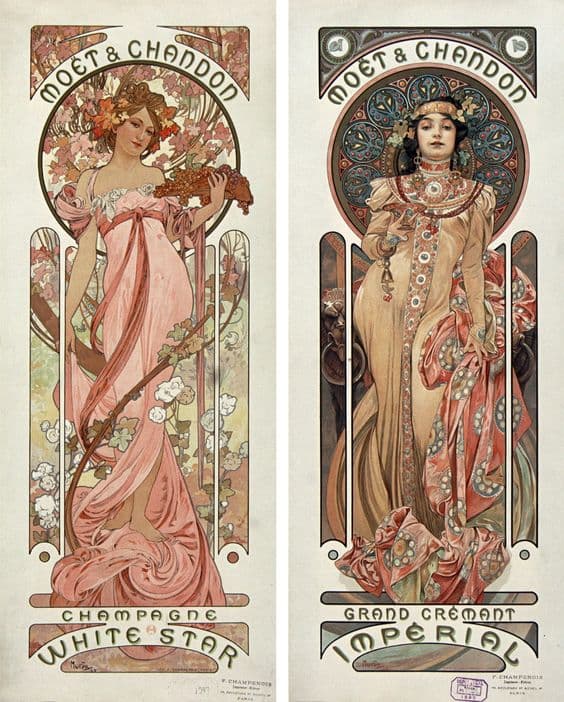
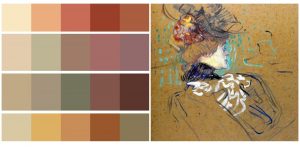
Since Art Nouveau aimed to reach the majority of the population, we can see its influence in many posters, advertisements, textiles, or book illustrations from this period. The color palette of this style is characterized by natural and unsaturated colors, with soft tones such as grays, mustard yellows, olives, and lilacs. Among others, Gustav Klimt (Austria), Alphonse Mucha (Czech Republic), and Toulouse-Lautrec (France) were prominent figures in this field.
Art Nouveau in architecture and interior design
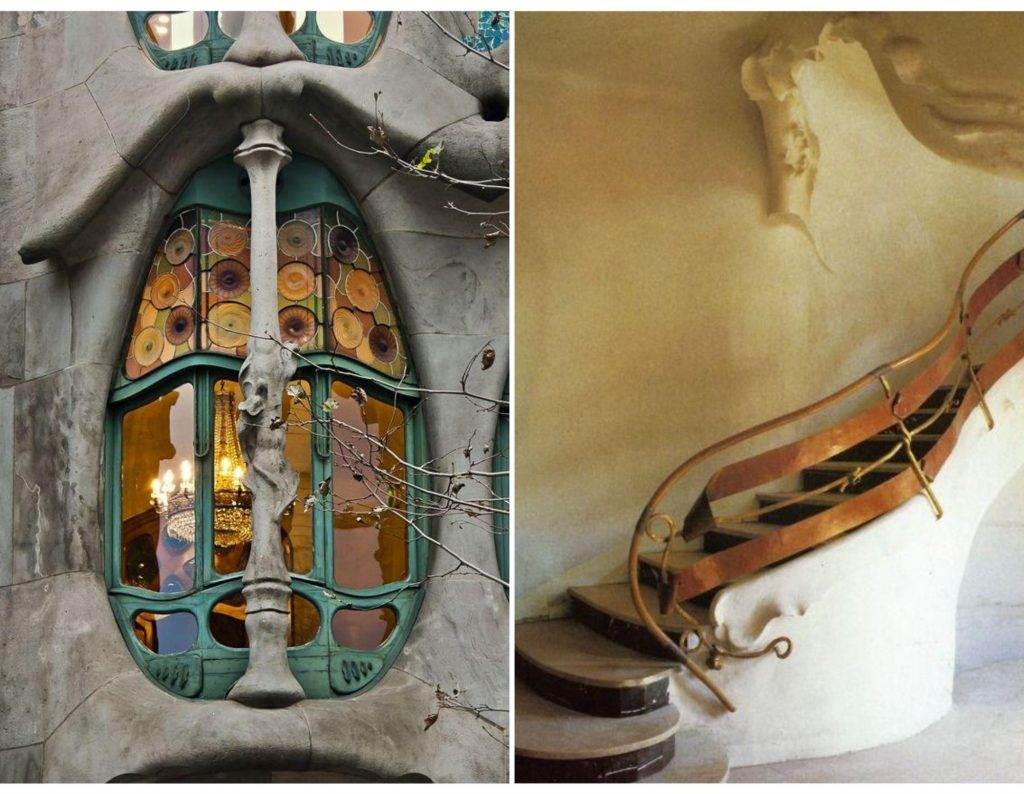
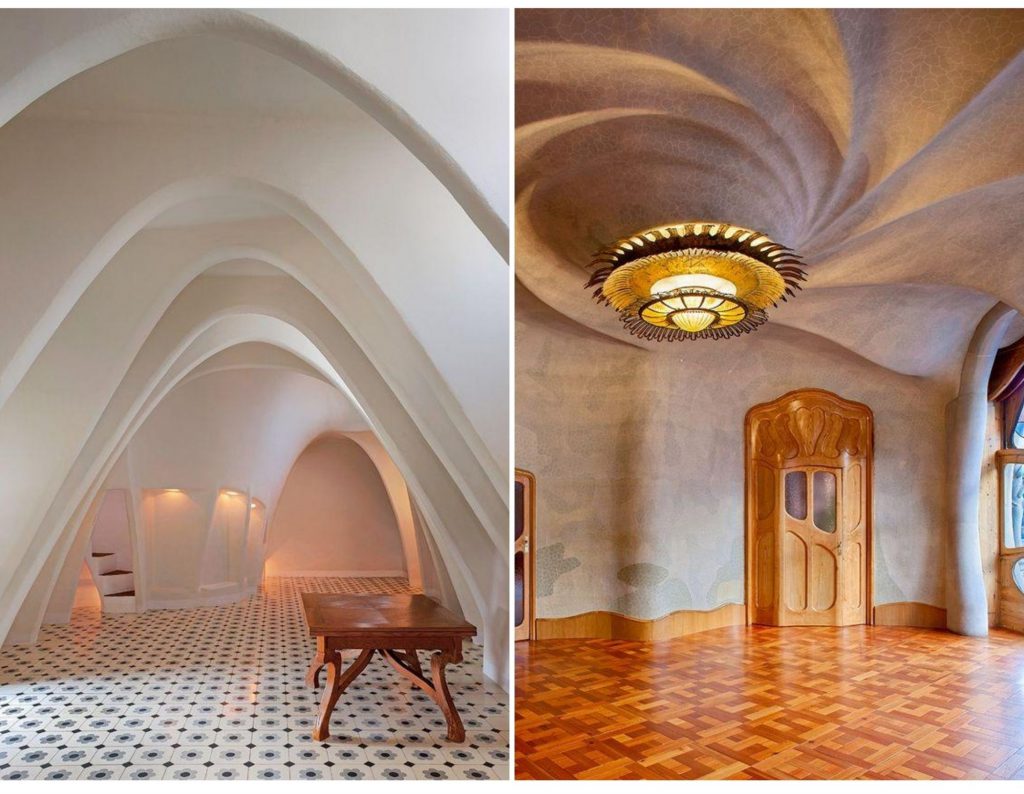
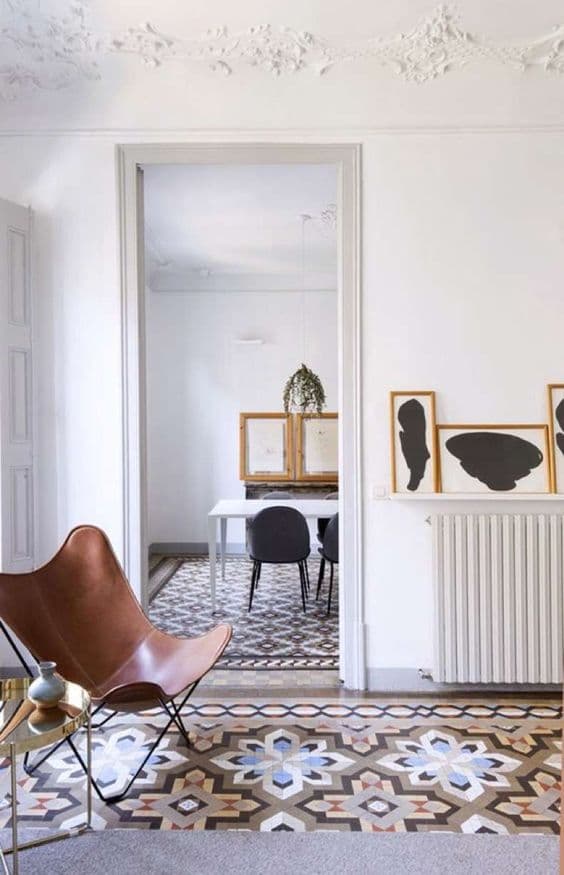
Above all, a unified style was sought, ensuring that each element blended seamlessly with the whole. Notable features include the windows and doors with carved wooden frames, the wrought iron columns and balusters with eccentric shapes , the stained-glass windows with floral motifs , the ceilings with curved silhouettes that play with solid and void, and the marquetry or hydraulic tile floors. In Catalonia, over 100 architects designed buildings in this style. Three stand out above all: Antoni Gaudí, Lluís Domènech i Montaner, and Josep Puig i Cadafalch . Other prominent architects included Otto Wagner (Austria) and William Morris (United Kingdom), among others.
Art Nouveau in furniture and decoration
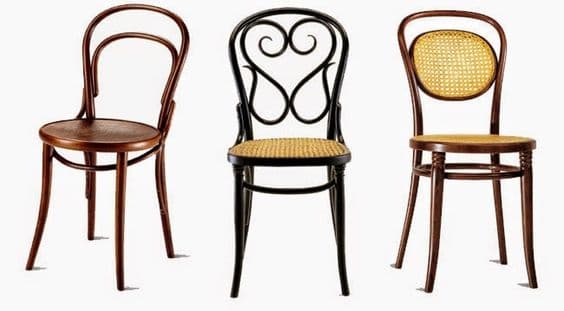
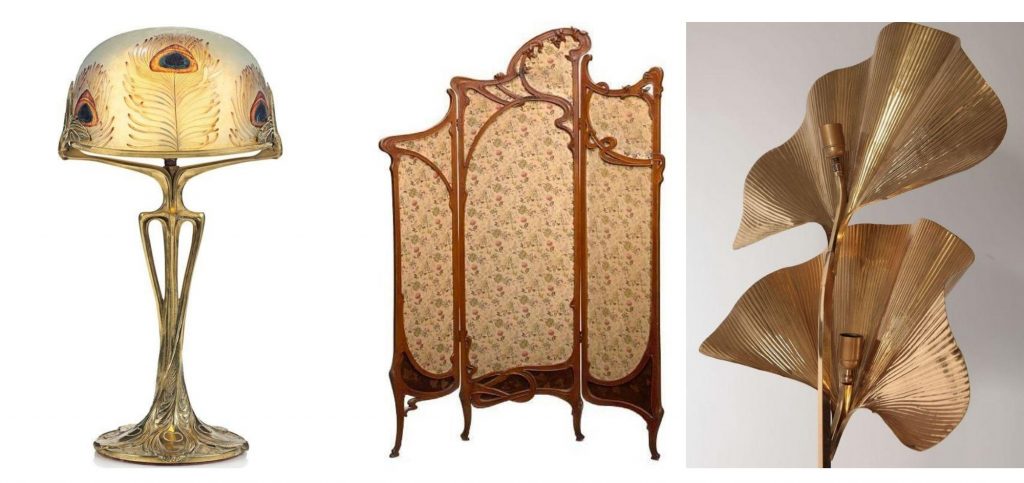
Most of the artisans who crafted furniture were also architects, seeking complete control over the interior design of their buildings . The furniture and decorative elements were characterized by elegant curves adorned with brass, gilding, carving, or ivory . These were complex, handcrafted pieces.
Why is Art Nouveau so important?
Studying the history of Art Nouveau makes much more sense in the current context: its intention was to break with the outdated Renaissance aesthetic to adapt it to the new industrial era that society was experiencing at the time of its creation. The importance of Art Nouveau goes far beyond what can be gleaned from basic information such as the date the artistic movement began. Many art historians consider Art Nouveau to have been key to the later creation of the Art Deco movement and even the Bauhaus school. What stands out most about Art Nouveau is the intention with which it was born: to break a social reality in order to create a new one adapted to the knowledge acquired ; and the way in which it united many countries. Although the word is French, the artistic movement does not exactly come from the paradise of croissants with views of the Eiffel Tower.What are the historical influences of Art Nouveau?
The roots of the Art Nouveau movement lie in another movement called Arts & Crafts , created by the designer William Morris in 1861. This artistic and decorative movement gave greater importance to nature and handcrafted objects as a way to counteract the unstoppable industrialization. Art Nouveau took up the challenge, giving importance to these aspects of Arts & Crafts, but adding the possibilities that the new materials and techniques facilitated by the new industrialization. The goal was to create a modern style, more in line with the culture and mentality of the time , derived from the knowledge accumulated throughout the history of humanity. As a curious fact, the fact that it is more recognized by its French name makes sense: Paris was a great exponent of Art Nouveau from where it spread rapidly.
What is the difference between Art Nouveau and Art Deco?
Art Deco means ‘decorative arts’ as the name derives from the abbreviation of Arts Décoratifs . This artistic movement emerged just as Art Nouveau was losing momentum until it eventually faded away, so it could be considered its successor. As an example of one of the many differences between Art Nouveau and Art Deco , the latter adores geometric shapes while modernist art favors asymmetry. Another difference is that Art Nouveau is inspired by artists such as Toulouse-Lautrec or Klimt and nature itself, while Art Deco tries to introduce the avant-garde into the home.What are the most prominent characteristics of Art Nouveau or Modernism?
There are certain characteristics that can help us clearly identify the Art Nouveau style and even implement it in our interior design if you want to enjoy its atmosphere at home:- It is a style that embraces modernity , in contrast to what was considered at the time to be state impositions (the classic).
- Art Nouveau advocates for art to intervene in urbanizations and cities to transform them into spaces where nature is very present.
- Free, natural, fluid, asymmetrical and dynamic forms are preferred in this decorative or design style.
- The materials typical of Art Nouveau are colorful, including finishes, wood, metal, and glass .
- It is a style that actively pursues decoration and focuses on both textiles and all kinds of utensils such as tableware.
If you want to incorporate Art Nouveau style into the decor of your home, business, or other space, we’re your best ally. We have a deep understanding of all its facets and offer the freshest and most innovative ideas on the market. Put us to the test!